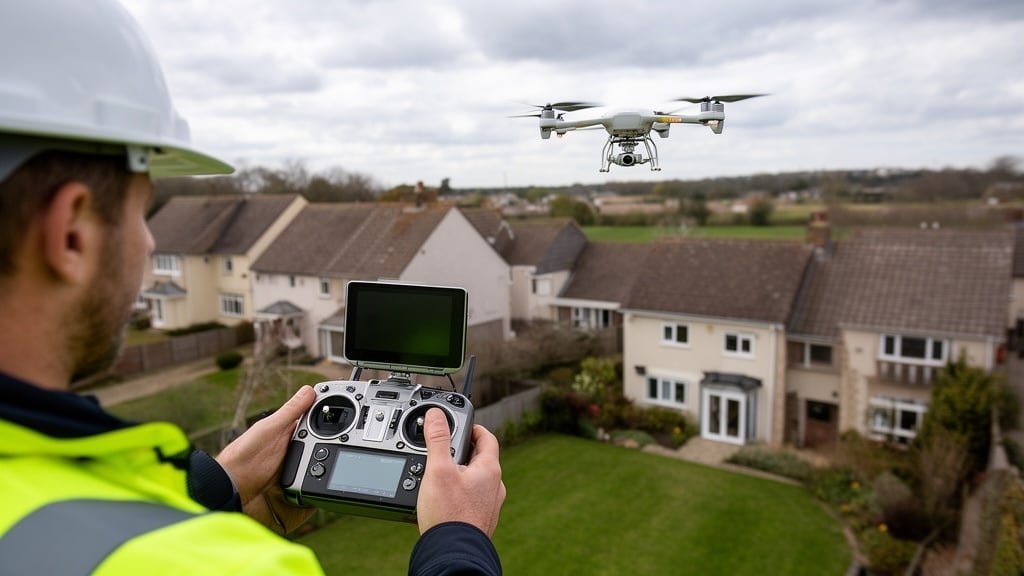
The property surveying industry is experiencing a technological revolution, and drone technology is at the forefront of this transformation. At My Home Buyers Survey, we've embraced advanced survey technology including drones, thermal imaging cameras, and moisture detection equipment to provide our clients with more comprehensive, accurate, and detailed property assessments than ever before.
In this article, we'll explore how modern technology is enhancing home surveys, explain the benefits of drone inspections, and describe the other cutting-edge tools our RICS-accredited surveyors use to assess properties across the UK. For comprehensive survey information, see our Complete Guide to Home Surveys.
The Evolution of Property Surveying Technology
Traditional property surveying has relied on visual inspection, ladders, and the experienced eye of qualified surveyors. While these fundamentals remain essential, technology has dramatically expanded what surveyors can assess and how thoroughly they can inspect properties.
Historical Context: For decades, surveyors were limited to examining only what they could safely reach with ladders and access equipment. Tall chimneys, high-level roof areas, and inaccessible sections often received only visual assessment from ground level, potentially missing important defects.
The Technology Revolution: Modern surveying technology addresses these limitations, enabling surveyors to thoroughly examine every part of a property. Drones can access high-level areas, thermal imaging reveals hidden problems, and advanced moisture meters detect damp that isn't visible to the naked eye.
Drone Technology in Home Surveys
Drones (also called UAVs or unmanned aerial vehicles) have transformed how surveyors inspect roofs and high-level areas of properties. At My Home Buyers Survey, our drone-equipped surveyors can provide detailed aerial inspections that were previously impossible or prohibitively expensive.
What Can Drones Inspect?
Our survey drones are equipped with high-resolution cameras that can capture detailed images of:
- Roof coverings: Close-up inspection of tiles, slates, and flat roof membranes to identify damage, displacement, or deterioration
- Chimney stacks: Detailed assessment of brickwork, pointing, flaunching, and chimney pots without the need for scaffolding
- High-level walls: Inspection of gable ends, tall walls, and areas above conservatory or extension roofs
- Gutters and rainwater goods: Assessment of guttering, downpipes, and drainage at roof level
- Flat roofs: Comprehensive inspection of flat roof areas, ponding, and membrane condition
- Solar panels: Condition assessment of photovoltaic systems and mounting brackets
Benefits of Drone Surveys
Using drone technology in home surveys provides numerous advantages:
Safety: Surveyors can thoroughly inspect high-level areas without using tall ladders or scaffolding, reducing risk to surveyors and minimizing disturbance to the property. This is particularly important for properties with steep or complex roof designs.
Comprehensive Coverage: Drones can access areas that are physically difficult or impossible to reach with traditional equipment. They can fly over conservatories to inspect walls behind, hover next to tall chimneys, and examine roof valleys and abutments from all angles.
Detailed Documentation: High-resolution photographs and video footage provide permanent records of roof and high-level condition. These images can be included in survey reports, helping clients clearly understand defects and their severity.
Cost Efficiency: Drone inspections eliminate the need for expensive scaffolding or cherry pickers for initial assessments, keeping survey costs reasonable while actually improving inspection quality.
Time Savings: Drone inspections can be completed quickly, allowing surveyors to spend more time analyzing findings rather than setting up access equipment. This contributes to faster turnaround times for survey reports.
Limitations and Regulations
While drones greatly enhance surveys, there are some limitations and regulatory considerations:
Weather Dependence: Drones cannot fly safely in high winds, heavy rain, or poor visibility. In adverse weather conditions, traditional inspection methods must be used or the inspection rescheduled.
Regulatory Compliance: Commercial drone operation requires certification and adherence to Civil Aviation Authority (CAA) regulations. All My Home Buyers Survey drone pilots hold appropriate CAA qualifications and operate drones in compliance with UK regulations.
Privacy Considerations: We respect neighbor privacy and ensure drone operations comply with privacy laws and regulations. Flights are planned to minimize intrusion while thoroughly inspecting the subject property.
Not a Complete Replacement: Drones complement but don't entirely replace traditional surveying methods. Some assessments still require physical access for close examination, testing, and measurement.
Thermal Imaging Technology
Thermal imaging cameras are another powerful tool in the modern surveyor's arsenal. These devices detect infrared radiation (heat) and create visual representations of temperature differences across surfaces.
What Thermal Imaging Reveals
Our RICS surveyors use thermal imaging cameras to identify:
- Heat loss: Areas where insulation is missing, damaged, or ineffective show as temperature anomalies
- Air leakage: Gaps and cracks in the building envelope appear as cold spots where air infiltration occurs
- Hidden moisture: Damp areas behind walls and ceilings show different temperatures from dry areas
- Structural defects: Some structural issues create temperature differences that reveal their location
- Underfloor heating: Verification that underfloor heating systems are functioning correctly and uniformly
- Thermal bridging: Areas where heat bypasses insulation, often at junctions and connections
Benefits of Thermal Imaging
Thermal imaging provides several advantages in property surveys:
Non-Invasive: Problems can be detected without destructive investigation or removing finishes. This allows surveyors to identify issues that would otherwise require intrusive testing.
Early Detection: Many defects are detectable with thermal imaging before they become visible problems, allowing early intervention and preventing costly damage.
Energy Efficiency Assessment: Thermal imaging provides insights into how well a property retains heat, helping buyers understand potential energy costs and improvement opportunities.
Verification Tool: Thermal imaging can verify claims about insulation upgrades or help identify whether apparent damp stains are due to active moisture or historic issues that have been addressed.
Advanced Moisture Detection
Modern moisture meters have evolved far beyond simple electrical resistance devices. My Home Buyers Survey uses professional-grade moisture detection equipment including:
Electrical Moisture Meters: These devices measure electrical resistance or capacitance changes caused by moisture in materials. Our surveyors use calibrated meters to take readings throughout properties, identifying areas with elevated moisture levels.
Radio Frequency Moisture Meters: These non-invasive devices can detect moisture beneath surfaces without making contact, helping identify damp behind tiles, paneling, or other finishes.
Hygrometers: These instruments measure relative humidity in the air, helping assess ventilation adequacy and condensation risk in properties.
Digital Documentation and Reporting
Technology has also transformed how survey findings are documented and presented:
Digital Photography: High-resolution digital cameras document defects with clarity impossible using traditional methods. Our reports include annotated photographs showing exactly what issues were identified and where they're located.
3D Scanning: For complex properties or renovation projects, 3D laser scanning can create accurate digital models showing dimensions and spatial relationships.
Digital Report Delivery: Survey reports are delivered digitally for fast access, easy sharing with other professionals, and convenient storage. PDF reports can be viewed on any device and include hyperlinks for easy navigation.
When is Technology-Enhanced Surveying Most Valuable?
While all our surveys benefit from modern technology, certain property types and situations particularly benefit from advanced equipment:
- Period properties: Where accessing tall chimneys and complex roof structures is difficult
- Thatched properties: Where drone inspection avoids disturbing the delicate thatch
- Properties with flat roofs: Where drainage issues and membrane condition need close assessment
- Suspected damp problems: Where thermal imaging and moisture detection reveal hidden issues
- Energy efficiency concerns: Where thermal imaging identifies heat loss and insulation defects
- Complex roof designs: Where multiple levels, valleys, and abutments make traditional access difficult
The Future of Property Surveying Technology
Survey technology continues to evolve, and My Home Buyers Survey stays at the forefront of these developments:
Artificial Intelligence: AI-powered image analysis can help identify defects in photographs and flag areas requiring detailed assessment. While AI cannot replace the judgment of qualified surveyors, it can enhance efficiency and consistency.
Augmented Reality: AR technology may allow surveyors to overlay information about hidden services, structure, and defects onto live views of properties.
Advanced Sensors: New sensor technologies continue to emerge, potentially including gas detection, structural movement monitoring, and enhanced moisture mapping capabilities.
Technology and Traditional Surveying Skills
It's important to understand that technology enhances but doesn't replace the skills and judgment of qualified RICS surveyors. At My Home Buyers Survey, our approach combines:
- Qualified expertise: All our surveyors are RICS-accredited with extensive experience
- Traditional skills: Physical inspection, testing, and assessment remain fundamental
- Technology integration: Advanced tools provide additional data and access
- Professional judgment: Experienced surveyors interpret findings and provide advice
Technology provides more information, but it takes a skilled surveyor to analyze that information, understand its significance, and provide clear, practical advice to clients.
Cost Implications of Technology-Enhanced Surveys
Clients often ask whether technology-enhanced surveys cost more than traditional surveys. At My Home Buyers Survey, we've integrated technology into our standard survey process without significant price increases because:
- Technology actually reduces some costs by eliminating scaffolding and extensive access equipment
- More thorough inspections protect both surveyors and clients from missed defects
- Efficiency gains from technology allow competitive pricing
- Investment in equipment is spread across many surveys
In essence, you receive a better, more comprehensive survey without paying substantially more than you would for traditional surveying methods.
Choosing a Technology-Enabled Surveyor
When selecting a surveyor, consider whether they use modern technology to enhance their inspections. Questions to ask include:
- Do you use drone technology for high-level inspections?
- Are your drone pilots properly licensed and insured?
- Do you use thermal imaging cameras? In what circumstances?
- What types of moisture detection equipment do you use?
- Will technology-captured images be included in my survey report?
- Are there additional charges for technology use?
Book Your Technology-Enhanced Survey Today
At My Home Buyers Survey, we combine the expertise of RICS-accredited surveyors with cutting-edge technology to provide the most comprehensive property assessments available. Our drone-equipped surveyors, thermal imaging capabilities, and advanced detection equipment ensure nothing is missed during your home survey.
Don't settle for outdated survey methods that can't access crucial areas of your property. Choose My Home Buyers Survey for a thorough, technology-enhanced inspection that gives you complete confidence in your property purchase.
Contact us today through the form below to arrange your advanced property survey. We offer competitive pricing, fast turnaround times, and the most comprehensive inspections available in the UK market.
Book Your Technology-Enhanced Survey
Drone inspections, thermal imaging, and expert RICS surveyors