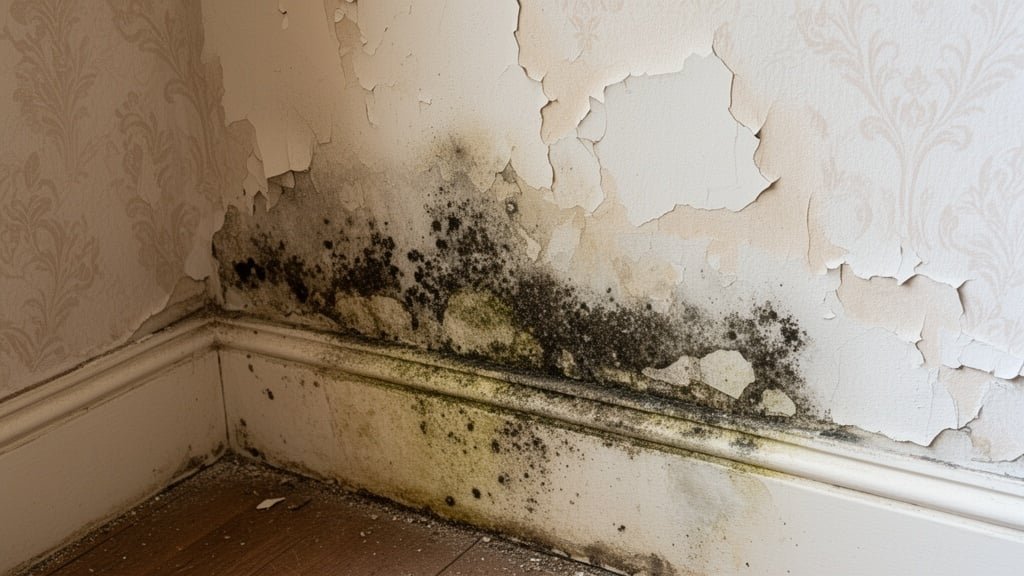
My Home Buyers Survey explains how professional surveys detect damp problems that could cost thousands to fix. Understanding moisture issues helps you make informed decisions when buying a property. Learn more in our Complete Guide to Home Surveys.
The Three Types of Damp
Damp is one of the most common issues found during home surveys. There are three main types, each with different causes and solutions.
1. Rising Damp
Rising damp occurs when groundwater rises up through walls due to a failed or missing damp proof course (DPC). It typically affects ground floor walls up to about one meter high.
Signs of rising damp:
- Tide marks on walls (usually up to 1m from floor)
- Peeling paint or wallpaper at low level
- Crumbling plaster
- White salt deposits on walls
- Damp, musty smell
- Decaying skirting boards
Typical repair cost: £2,000-£6,000 depending on the extent of the problem
2. Penetrating Damp
Penetrating damp occurs when water enters through walls, roofs, or windows due to defects in the building fabric. Unlike rising damp, it can affect any part of the building.
Common causes:
- Damaged or missing roof tiles
- Cracked rendering or brickwork
- Blocked or damaged gutters
- Failed seals around windows
- Bridged cavity walls
- Defective flashings
Typical repair cost: £500-£5,000 depending on the cause
3. Condensation
Condensation is the most common form of dampness in UK properties. It occurs when warm, moist air hits cold surfaces, causing water droplets to form.
Signs of condensation:
- Water droplets on windows and walls
- Black mould growth (especially in corners)
- Mildew on curtains and fabrics
- Musty smell
- Rotting window frames
Typical solution cost: £500-£3,000 for improved ventilation and insulation
How Surveyors Detect Damp
During a RICS home survey, surveyors use several methods to identify moisture problems:
Visual Inspection
Experienced surveyors can spot the telltale signs of damp: staining, peeling wallpaper, crumbling plaster, and mould growth. They look in typical problem areas like external walls, around windows, and in corners.
Moisture Meters
Electronic moisture meters measure the moisture content in walls. They insert probes into walls or use non-invasive scanning to detect elevated moisture levels.
Thermal Imaging
Advanced surveyors use thermal imaging cameras to identify cold spots and moisture patterns invisible to the naked eye. This technology is particularly useful for detecting hidden leaks and insulation problems.
Cavity Inspection
For suspected cavity wall issues, surveyors may use borescopes to inspect the cavity space for debris, bridging, or insulation problems that could cause damp.
Common Damp Problems by Property Age
Pre-1920 Properties
Older properties often have:
- Failed or non-existent damp proof courses
- Solid walls (no cavity) more prone to penetrating damp
- Original lime plaster that may be failing
- Poor ventilation
1920s-1970s Properties
Mid-century homes typically face:
- Aging cavity wall ties causing bridging
- Original single-glazed windows with condensation issues
- Failed DPC membranes (30-50 year lifespan)
- Asbestos cement roofing deterioration
Modern Properties (Post-1980)
Even newer properties can have:
- Condensation from inadequate ventilation
- Construction defects (poor workmanship)
- Failed sealants around windows and doors
- Cavity insulation causing damp
Real-Life Damp Survey Example
Last month, I surveyed a 1930s semi-detached house for a young couple. The property looked immaculate during viewings - freshly painted throughout with lovely new carpets. But my RICS Level 2 survey told a different story.
Using my moisture meter, I detected elevated readings in both reception room walls. The fresh paint was hiding the problem. Further investigation revealed:
- Rising damp affecting 3 meters of wall (DPC had failed)
- Penetrating damp from a cracked render on the side wall
- Evidence of previous damp treatment that hadn't solved the underlying issues
The cosmetic work had masked serious problems. My survey findings enabled the buyers to renegotiate £8,500 off the purchase price for proper remedial work.
Damp Treatment Costs
Understanding potential repair costs helps you negotiate effectively:
| Problem | Typical Cost |
|---|---|
| Rising damp (one wall) | £2,000-£4,000 |
| Rising damp (whole house) | £4,000-£8,000 |
| Penetrating damp repairs | £500-£5,000 |
| Condensation solutions | £500-£3,000 |
| Replastering after treatment | £50-£80 per m² |
Questions to Ask About Damp
If your survey identifies damp issues, ask your surveyor:
- What type of damp is it? Different types need different solutions
- How extensive is the problem? One wall or the whole house?
- What's the likely cause? Understanding the cause helps prevent recurrence
- How urgent is treatment? Some damp is more pressing than others
- What's the estimated repair cost? Use this for negotiation
- Could it affect the structure? Serious damp can damage timbers
- Are there any guarantees? If previously treated, check warranty validity
Negotiating After Damp Is Found
If your survey reveals damp problems, you have leverage to renegotiate. Here's how:
Get Specialist Quotes
Ask 2-3 damp treatment specialists for written quotes. Use these real figures when negotiating with the seller.
Request a Price Reduction
Present the quotes to the seller and request a price reduction to cover the work. Most sellers will negotiate rather than lose the sale.
Ask for Treatment Before Completion
Alternatively, request that the seller arranges and pays for treatment before you complete the purchase. Ensure work is guaranteed.
Consider Walking Away
If damp is extensive and the seller won't negotiate, it may be better to walk away. Serious damp problems can lead to structural issues and health problems.
Why Damp Matters
Damp isn't just unsightly - it can cause serious problems:
Health Issues
- Respiratory problems from mould spores
- Allergies and asthma aggravation
- Increased risk of infections
Structural Damage
- Timber rot in floors and roof structures
- Damaged plaster and decorations
- Corroded wall ties in cavity walls
- Salt damage to brickwork
Financial Impact
- Expensive treatment and repairs
- Higher heating bills (damp walls lose heat)
- Reduced property value
- Difficulty getting insurance or mortgages
Preventing Damp Problems
Once you've bought your property, prevent damp issues with:
- Regular gutter cleaning and maintenance
- Adequate ventilation (especially in bathrooms and kitchens)
- Prompt repair of cracked render or broken tiles
- Maintaining drainage and ground levels around the property
- Using dehumidifiers in problem areas
- Opening windows regularly to allow air circulation
Conclusion
Damp is one of the most common issues found during home surveys, but it's also one of the most important to identify before buying. A professional RICS Level 2 survey or Level 3 building survey will thoroughly assess your property for all types of moisture problems.
Don't buy a property without understanding its damp situation. The survey cost is minimal compared to the thousands you might spend fixing undiscovered damp problems. Use survey findings to negotiate repairs or price reductions, protecting your investment and ensuring your new home is healthy and dry.
Ready to get your property surveyed? Contact our RICS surveyors for expert damp detection and comprehensive property assessment.
Related Articles
Concerned About Damp?
Our RICS surveyors use professional equipment to detect all types of moisture problems.
Book Your Survey